

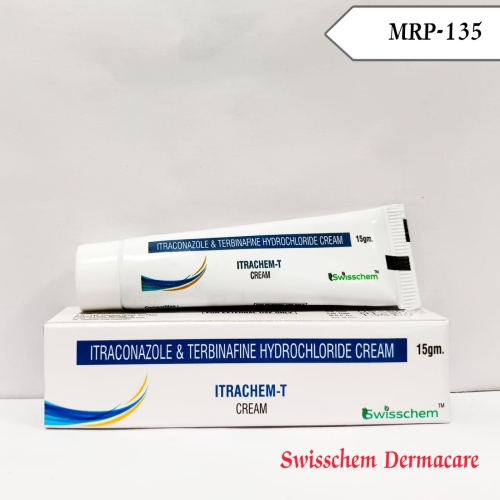
Itraconazole With Terbinafine Cream
ITRACHEM-T CREAM
Description
Itraconazole and terbinafine hydrochloride cream are two antifungal medications that are commonly used to treat various fungal infections of the skin, including athlete’s foot (tinea pedis), jock itch (tinea cruris), and ringworm (tinea corporis).
Itraconazole is a triazole antifungal agent that works by inhibiting the growth of fungi. It is effective against a wide range of fungal species and can penetrate deep into the skin to target the root cause of the infection. Itraconazole interferes with the synthesis of ergosterol, an essential component of fungal cell membranes, leading to the disruption of fungal cell growth and ultimately the elimination of the infection.
Terbinafine hydrochloride is another antifungal medication that belongs to the allylamine class. It works by inhibiting an enzyme called squalene epoxidase, which is crucial for the production of ergosterol in fungal cell membranes. By blocking this enzyme, terbinafine disrupts the synthesis of ergosterol, weakening the fungal cell membrane and causing its death.
When combined in a cream formulation, itraconazole and terbinafine hydrochloride act synergistically to provide enhanced antifungal effects. The cream is typically applied topically to the affected area of the skin, allowing the active ingredients to penetrate the outer layers and reach the site of infection. The cream provides localized treatment, targeting the fungal infection directly.
How to use
When using itraconazole and terbinafine hydrochloride cream, it’s important to follow the instructions provided by your healthcare professional or the directions on the product’s packaging. Here is a general guide on how to use the cream:
- Clean and dry the affected area.
- Apply a thin layer of the cream to the affected skin and surrounding area.
- Wash your hands after application.
- Follow the recommended frequency of once or twice daily.
- Complete the full course of treatment.
- Monitor for any skin irritation or side effects.
- Follow additional instructions from your healthcare professional.
- Consult your healthcare professional or refer to the product’s packaging for specific guidelines.
Benefits
The use of itraconazole and terbinafine hydrochloride cream offers several benefits for the treatment of fungal skin infections:
- Effective against various fungal infections like athlete’s foot, jock itch, and ringworm.
- Localized treatment targets the infection directly.
- Dual-action antifungal effects enhance effectiveness.
- Deep penetration reaches the root of the infection.
- Convenient and easy to use.
- Reduced risk of systemic side effects.
- Provides relief from itching, redness, and discomfort.
Side effects
Like any medication, itraconazole and terbinafine hydrochloride cream may have potential side effects. While not everyone will experience side effects, it’s important to be aware of possible reactions. Here are some potential side effects associated with the use of this cream:
- Possible side effects of itraconazole and terbinafine hydrochloride cream include skin irritation, allergic reactions, skin discoloration, dryness or peeling, sensitivity to sunlight, and rare systemic effects.
- Discontinue use and seek medical attention for severe or persistent side effects.
- Individual reactions may vary, and it’s important to follow healthcare professional instructions and product packaging information.
Precautions
Here are the main precautions to consider when using itraconazole and terbinafine hydrochloride cream:
- Inform your healthcare professional about allergies and potential interactions with other medications.
- Avoid contact with eyes and mucous membranes.
- Consult your healthcare professional if pregnant, planning to become pregnant, or breastfeeding.
- Discuss any pre-existing medical conditions with your healthcare professional.
- Protect the treated area from excessive sun exposure.
- Follow the prescribed dosage and duration of treatment.
- Store the cream out of reach of children.
- Remember to consult your healthcare professional for personalized advice based on your specific situation.
Storage
Keep it in a cool and dry place
Frequently Asked Questions
Q: What makes Itrachem-T Cream more effective than standard single-ingredient antifungal treatments?
A: This Swisschem Dermacare cream combines Itraconazole and Terbinafine, offering a dual-action synergy that targets fungal cell membranes from two different biological angles.
Q: Can this cream reach deep-seated infections beneath the skin’s surface?
A: Yes, the formulation is designed for deep penetration, allowing the active ingredients to reach the root cause of persistent fungal infections.
Q: Which specific skin conditions is Itrachem-T best suited to treat?
A: It is highly effective against common fungal issues, including athlete’s foot, jock itch, and ringworm, by disrupting the essential growth of fungi.
Q: How does Itraconazole specifically work to eliminate the spreading infection?
A: Itraconazole interferes with ergosterol synthesis, an essential component of the fungal cell membrane, leading to the eventual death of the infecting organisms.
Q: What is the correct way to apply this cream for the best results?
A: Apply a thin layer to the clean, dry affected area and surrounding skin once or twice daily, following your doctor’s exact instructions.
Q: Are there any precautions I should take regarding sun exposure during treatment?
A: Since the cream can increase skin sensitivity, you should protect the treated area from excessive sunlight to avoid potential irritation or discoloration.
Q: Is it safe to stop using the cream once the redness disappears?
A: No, you must complete the full treatment course to ensure the infection is totally eradicated and to prevent the fungus from returning.
Q: Should I be concerned about internal side effects with this topical cream?
A: Because the treatment is localized and applied directly to the skin, there is a significantly reduced risk of experiencing systemic side effects.